Tiny Gardens Cute Comfy Coloring Pages
A Designer’s First Glance: Charm That Breathes, Not Shouts
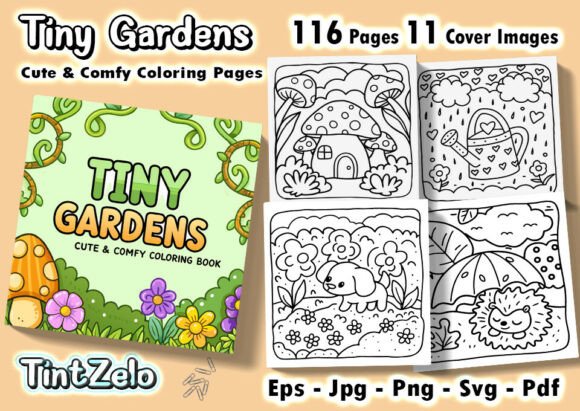
Opening Tiny Gardens Cute Comfy Coloring Pages, I felt an immediate shift — not excitement, but quiet recognition. This isn’t a bold, high-contrast graphic meant for streetwear or logo placement. It’s soft-edged, gently rounded, and full of breathing room between stems, petals, and tiny sprigs. The mood is unhurried: think morning light on a windowsill herb garden, not a botanical textbook. As an embroidery designer who’s stitched everything from hyper-detailed florals to minimalist monograms, I appreciated how the line weight stays consistent — not too thin to vanish in fill stitch, not so thick it fights satin stitch definition. It feels like a design drawn *for* translation into thread, not just printed on paper.
From Page to Patch: How It Translates in Real Embroidery Projects
Last week, I tested Tiny Gardens Cute Comfy Coloring Pages as the centerpiece for a custom embroidered tote bag destined for a local nursery boutique. We used a medium-weight canvas with tear-away stabilizer and matte cotton thread. The result? A finished product that looked handmade *in the best way* — warm, intentional, and quietly confident. Customers paused at the display. One picked it up, traced the outline of a little watering can with her finger, and said, “It feels like something my grandma would’ve drawn.” That’s the power here: this isn’t flashy. It’s comforting. And comfort sells — especially in baby embroidery, kitchen towels, pillow covers, and holiday gifts like embroidered tea towels for hostess presents.
It works beautifully on sweatshirt embroidery where texture matters — the gentle curves soften the bulk of looped fleece without getting lost. On a lightweight apron for a small-batch bakery, it added personality without overwhelming the fabric. As a machine embroidery design for a baby onesie? Perfect. The scale is inherently forgiving: no micro-details that snag on delicate skin, no dense stitch areas that stiffen the neckline. Even as an applique design layered over chambray, the shapes held clarity without needing excessive underlay.
Where to Pause — Not Every Surface Is a Good Match
That same gentleness becomes a limitation in certain contexts. On dark fabric, especially black or navy, test contrast carefully — the fine interior lines can fade unless you boost thread saturation or add a subtle shadow stitch. On stretchy fabric like ribbed knit tees, the open composition means less structural support; use cutaway + topping, and consider simplifying inner details if your hoop size is under 4 inches. Curved surfaces like caps demand extra attention: those rounded leaves and tiny flower centers may distort slightly unless digitized with shape compensation — and since Tiny Gardens Cute Comfy Coloring Pages is a Graphics file (not a pre-digitized embroidery file), that step falls to you or your digitizer.
Also worth noting: while lovely for printable mockups and digital product previews, this isn’t built for heavy commercial embroidery volume out of the box. If you’re an Etsy seller bundling digital embroidery files, be clear with buyers that this is a coloring page-style graphic — not a ready-to-stitch file. It’s ideal for craft business owners who handle their own digitizing or work with a trusted service. For small shop product development, treat it as strong design assets — not plug-and-play embroidery files.
Why It Builds Trust — Not Just Visual Appeal
Customers don’t buy stitches. They buy feeling. Tiny Gardens Cute Comfy Coloring Pages delivers emotional resonance before the first needle drops. When stitched onto a linen pillow cover for a wedding gift, it reads as thoughtful, not generic. On personalized gifts — say, a child’s name stitched beside a tiny mushroom — the whimsy feels sincere, not cutesy. That authenticity translates directly to brand consistency for boutiques, handmade presentation for craft fairs, and buyer engagement online. People linger on listings featuring this kind of warmth. They imagine gifting it. They remember it.
But let’s be real: its strength is also its boundary. It won’t dominate a bold apparel collection. It won’t stand up to industrial laundering cycles without careful thread and stabilizer choices. Its value lies in intentionality — in choosing it *because* it fits the story you’re telling, not because it’s trendy.
Practical Notes Every Embroidery Designer Should Check
- Test first: Stitch a sample on scrap fabric matching your final project’s weight and texture — especially if using textured fabrics or thin fabric.
- Review stitch density: Since this originates as a Coloring Pages Amp graphic, confirm digitized versions avoid overly dense fill stitch in tight corners — it can pucker delicate fabrics.
- Confirm hoop size: The natural scale suits 4x4” to 5x7” hoops well. For smaller hoops (like 3x3”), simplify stems or omit interior details.
- Check small details: Tiny lettering or fine veins in leaves may need manual cleanup in digitizing software to prevent skipped stitches.
- Mock it both ways: Preview in black-and-white mockups and across light/dark fabric backgrounds before finalizing thread colors.
- Stabilizer matters: Use appropriate stabilizer for your fabric type — cutaway for knits, tear-away for stable wovens, topping for napped surfaces.
- Licensing clarity: Before selling finished products or digital embroidery files derived from Tiny Gardens Cute Comfy Coloring Pages, verify usage rights — especially for commercial embroidery and resale.
In short: Tiny Gardens Cute Comfy Coloring Pages is a quiet asset — not a loud statement. It earns its place in your design library by deepening the humanity of your handmade product, not by chasing attention. Use it where calm matters. Where care shows. Where customers feel seen, not sold to.