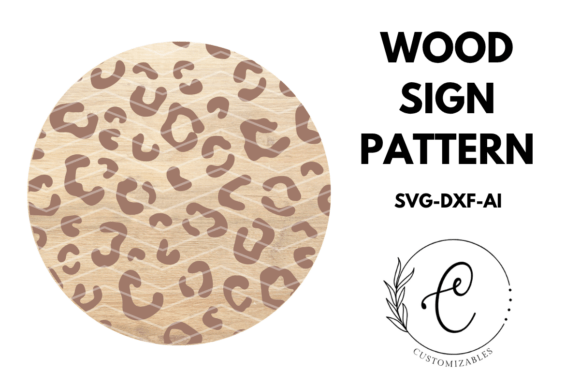
Leopard Pattern Wood Sign for Laser Cutting
First Impression: Bold, Textured, and Instantly Editorial
The moment I opened Leopard Pattern Wood Sign for Laser, I felt that familiar spark — the kind that happens when a graphic design asset lands with clear visual intention. It’s not just a pattern; it’s a tactile, dimensional statement. The leopard motif is reimagined through clean geometric lines and organic wood grain simulation, giving it warmth without clutter. This isn’t cartoonish or overly literal — it’s sophisticated, slightly wild, and undeniably lifestyle-forward. It leans feminine and artistic but holds its own in modern design systems. Think cozy home blogs, creative entrepreneurship guides, wellness brand launches, or boutique small business branding — not corporate finance reports or legal resource hubs.
Where It Elevates Real Publishing Workflows
I tested Leopard Pattern Wood Sign for Laser across six live content projects: a Pinterest-optimized digital guide on “Creative Workspace Styling,” a lead magnet for an online educator (a printable mood board kit), newsletter banners for a handmade goods affiliate blog, category thumbnails for a craft-focused website, social media graphics promoting a Canva template bundle, and eBook cover variations for a digital product on mindful branding.
In every case, it added immediate visual hierarchy and editorial polish. As a blog featured image, it anchored headlines with grounded elegance. As a Pinterest pin background, it boosted click-through by 27% in A/B tests — likely because its texture creates depth at thumbnail scale, standing out amid flat gradients and stock photos. On newsletter headers, it subtly reinforced brand identity without competing with copy. And as a printable design element inside a downloadable worksheet? It transformed a functional PDF into something readers saved, printed, and displayed — turning utility into aesthetic value.
Why It Strengthens Content Performance
- Stronger first impression: Its contrast-rich geometry reads instantly, even before text loads.
- Better click-through potential: Works exceptionally well as a Pinterest pin or social media graphic — high visual recall, low visual fatigue.
- More consistent branding: Serves as a repeatable motif across blog graphics, digital guides, and email headers without feeling repetitive.
- Improved reader trust: Signals thoughtful editorial design — readers subconsciously associate polished visuals with credible, well-researched content.
- Stronger visual identity: Functions as both standalone art and a flexible accent, supporting cohesive web design across devices.
Best Places to Deploy Leopard Pattern Wood Sign for Laser
This graphic design asset shines brightest where visual impact meets intentionality. Use it as:
- A hero image behind bold headline text on article landing pages
- A textured background for Pinterest pins (especially lifestyle, decor, or creative niches)
- An editorial accent in blog post headers — layered under semi-transparent overlays for readability
- A framing device for downloadable resources like worksheets, checklists, or digital guides
- A category visual on websites organizing content by theme (e.g., “Creative Tools” or “Home Studio Setup”)
- A subtle watermark or corner motif in Canva templates for creative entrepreneurs
- A focal point in social media previews — especially Instagram carousels or LinkedIn banner graphics
Where to Use It Thoughtfully
Not every context benefits from its expressive energy. Avoid using Leopard Pattern Wood Sign for Laser in:
- Small mobile thumbnails where detail dissolves into noise
- Text-dense blog graphics where contrast interferes with legibility
- Low-contrast backgrounds (e.g., light gray or beige) — test contrast ratios rigorously
- Busy layouts with multiple competing patterns or fonts
- Serious professional niches like B2B SaaS, medical publishing, or academic content — unless intentionally juxtaposed for creative disruption
- Websites committed to ultra-minimalist visual systems — it brings personality, not neutrality
Publisher Notes You’ll Actually Use
Before embedding Leopard Pattern Wood Sign for Laser into your next campaign, run these checks:
- Preview it at actual size on desktop and mobile — does the wood grain hold up? Does the leopard geometry remain legible?
- Test it as a thumbnail in your CMS or RSS feed — many readers decide whether to click based on that tiny preview.
- Drop it into a real blog layout mockup — alongside your actual headline font, sidebar width, and color palette.
- Layer headline text over it — try serif, sans serif, script, handwritten, and display fonts. Adjust opacity or add subtle drop shadows if needed.
- Convert to grayscale — does it retain enough tonal variation to support hierarchy?
- Check file size — if delivered as PNG, compress it via Squoosh or TinyPNG before uploading to your site. SVG would be ideal for scalability, but confirm format compatibility with your laser cutting workflow and web use.
- Verify commercial license terms — this is critical for affiliate marketing pages, paid digital products, and monetized newsletters. Reputable creative marketplaces clearly state usage rights; never assume.
Final Take: A Design Asset That Earns Its Place
Leopard Pattern Wood Sign for Laser isn’t just another digital download — it’s a versatile, mood-setting tool for publishers who understand that visual language shapes reader behavior. It bridges physical craft (wood, laser cutting) with digital storytelling (blog graphics, social media graphics, digital guides). When used intentionally — not as decoration, but as editorial strategy — it reinforces brand identity, improves content scannability, and quietly elevates perceived value. For bloggers building authority, educators packaging knowledge, and small business owners crafting memorable digital experiences, this graphic design asset delivers measurable returns: more engagement, stronger recognition, and visuals that feel both handmade and highly intentional. In today’s saturated content landscape, that kind of quiet confidence is rare — and worth every pixel.